
The students in Singapore's classrooms today will inherit a food system under pressure. What we teach them now — and what we serve them at lunch — will matter more than most people realise.
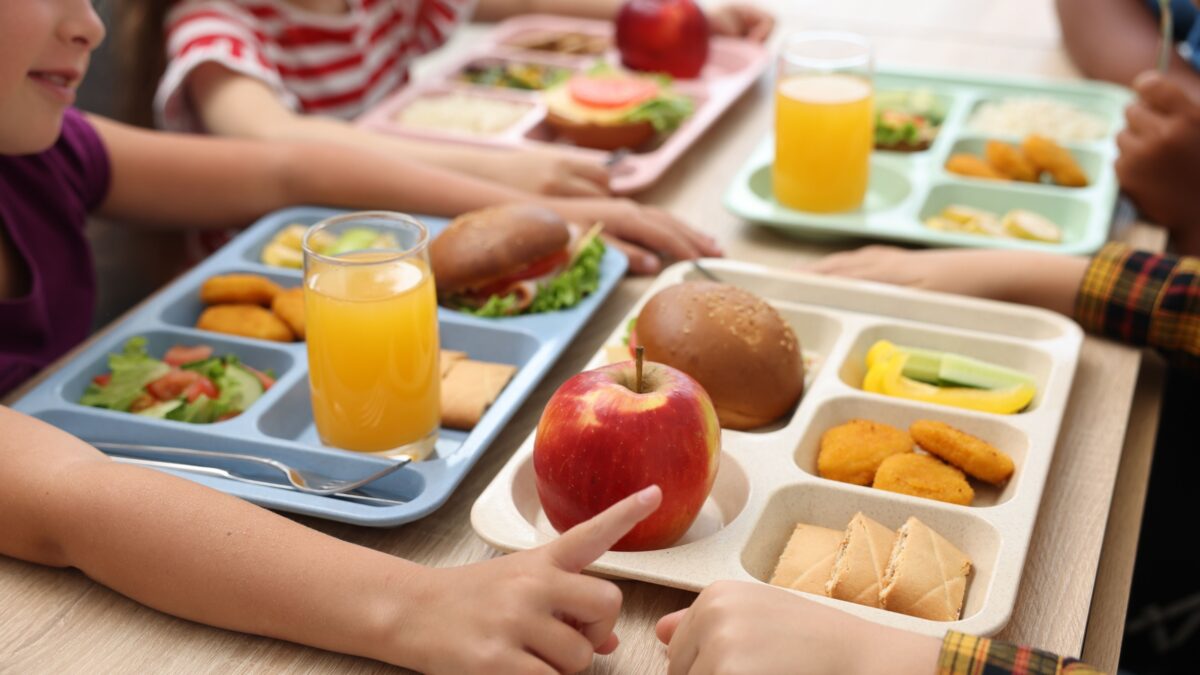
Walk into a school canteen in Japan and lunch looks different from almost anywhere else in the world. Students serve each other. The meal was made with ingredients sourced within the region. After eating, they sort their leftovers, wipe their own tables, and the amount of food left uneaten gets logged. Waste is less than 4 grams per child per meal — a number so low it's barely measurable (JoynTokyo, 2025). It's not a special programme. It's just Tuesday.
Compare that to a school cafeteria in Saipan, where a recent study found that roughly 65% of food served in a single day was left uneaten — 103 kilograms of leftovers discarded by one middle school in a single lunch period (Marianas Variety, 2026). Or to the United States, where an estimated 21% of calories served through school lunch programmes become plate waste (USDA/ERS, 2014).
The difference isn't a matter of resources or budget. Japan's school lunches cost roughly ¥250–¥450 per meal. What's different is the relationship between the school, the meal, and what gets taught around it — and that gap is built over decades, starting with the choices made in primary school.
Singapore is somewhere between these two pictures. Food services — restaurants, canteens, hotels — account for 28% of all food waste generated in the country (NEA, 2022). Households add more. Schools sit right in the middle of both, feeding children twice a day and shaping the habits they'll carry home.
What Other Countries Have Figured Out
Japan's kyushoku programme treats lunch as part of the school day, not a break from it. Students take turns serving each other, sort leftovers together, and the amount left uneaten gets logged. The concept of mottainai — "what a waste" — isn't taught from a textbook; it's practised every day at the table (Japan Child Support, 2025). By 2021, 56% of food purchases for Japanese schools came from local sources. The result: less than 4 grams of food wasted per child per meal.
South Korea built the same outcome through policy rather than tradition. After banning food waste from landfills and introducing a pay-as-you-throw system, the country moved from recycling less than 2% of food waste in 1995 to 95% today — by educating the public at every stage before enforcement began (KEIA, 2022). In a seven-month school pilot using AI-assisted tracking, the average reduction across five schools was 60%, with the best achieving 86% (Bioenergy Consultant, 2025).
Neither country got there by preaching. They made the consequences of waste visible at the point where it happens — and started that work with children.
Where Singapore Is Now — and the Question Worth Asking
Singapore is starting to reckon with this. MOE's Eco Stewardship Programme, launched in 2021, made food sustainability the focus of its 2023 cycle, strengthening curriculum resources on food production and waste reduction across schools (MOE, 2021). Primary school Social Studies covers resource conservation. The Upper Secondary Nutrition and Food Science syllabus addresses sustainable food consumption (MOE, 2024). Elias Park Primary has a food waste management programme where students are taught to order only what they can finish, and bio-digesters in the canteen recycle what's left (Mothership, 2021).
One recent development is worth watching closely: MOE's Central Kitchen Meal Model, rolled out to 13 schools from January 2026, was designed to solve a genuine and practical problem — schools struggling to find canteen stallholders as operators retire and competition from food courts intensifies (Mothership, 2025). The model uses pre-ordering to align meal production with actual demand, which MOE notes directly reduces over-preparation and food wastage (MOE, 2026). That's a real benefit, and the pre-order mechanic is genuinely smart.
The question is how schools make the most of it educationally. The practical elements of the food journey become less visible, which reduces the proximity that builds awareness.
What the Evidence Says About Changing This
The research on when food habits form is consistent. The primary school years — roughly ages 6 to 14 — are when children develop the food preferences and attitudes toward waste that stay with them into adulthood (MSU Extension, 2024). Studies in childcare settings have found that food waste fills almost 30% of the average waste bin at a typical Australian preschool — not because children are careless, but because no one has taught them otherwise. Habits form in the absence of intention just as readily as through it.
What schools teach about food doesn't have to be a dedicated subject. Farm to School programmes — connecting children to where ingredients are grown — reduced cafeteria waste by 17% in US schools (FoodRecovery.org, 2024). A cafeteria programme called No Scrap Left Behind, which simply made food waste visible through displays and discussion, cut waste per student by 28% in its first year without changing the menu or the kitchen (Alattar & Morse, 2021). WWF's Food Waste Warriors programme — where students conduct their own audits of cafeteria plate waste — prevented over 3,500 tonnes of greenhouse gas emissions across Florida schools in the 2023–24 year alone (WWF, 2025).
The pattern across all of these is the same: when students are involved in understanding what happens to food, waste goes down. When food is just something that appears and disappears, it doesn't.
For Singapore schools specifically, the opportunity lies in what students are already close to. The 30 by 30 goal — producing 30% of the country's nutritional needs locally by 2030 — means urban farms, vertical growing, and new food production methods are actively being developed here. A school that sources even one ingredient from a local farm, and makes that sourcing legible to students, is doing something textbooks can't. A canteen that composts its food scraps visibly — rather than routing them quietly to a bio-digester — gives students a model for what responsible consumption looks like in practice.
Singapore imports more than 90% of its food. That fact sits in the Geography syllabus and the news. But it rarely makes it to the lunch tray in a way children can feel.
The Window Is Now
The students currently in Singapore's primary and secondary schools will be adults by the 2040s — when the stresses on the global food system are projected to be significantly sharper than they are now. A study published in Nature in June 2025 found that every additional degree of warming will cut global crop production by 120 calories per person per day; by 2050, yields are expected to be down 8% regardless of what happens to emissions now (Hultgren et al., 2025). Research from Woodwell Climate Research Center projects crop yield failures could be 25 times higher by mid-century than they are today (Caparas, 2022).
What preparation looks like at the school level isn't complicated. A garden on the school grounds. A canteen that makes waste visible rather than invisible. A lesson that connects the tray in front of a student to the farm it came from. Procurement choices that send a message every single day about what food is worth.
Japan built its food culture by making lunch part of school, not a break from it. South Korea shifted household behaviour by making the cost of waste legible to everyone, starting young. Singapore has its own version of this to build, and the infrastructure is beginning to exist.
What This Means for Everyday Families
This conversation isn't only for school administrators and policymakers. It's for anyone who has a child bringing home habits from school — or losing them.
When children understand where food comes from and what it costs to waste it, that doesn't stay at the school gate. It comes home in the questions they ask, the habits they form at the dinner table, and the choices they'll eventually make as adults doing their own grocery shopping. Research consistently shows that food education at school has spillover effects on households — children who learn about food waste reduce it at home too (MSU Extension, 2024).
For parents, this means that what a school chooses to teach and serve is genuinely relevant to family life — not just nutrition, but values. It's worth asking: does the canteen reflect what we want children to learn about food? Does the curriculum give them a frame for understanding where their meals come from and why it matters if they don't finish them?
For the broader public, Singapore's food security situation — importing more than 90% of food, with Semakau Landfill projected to reach capacity by 2035 — isn't a government problem to solve in isolation. It's a shared challenge that gets easier or harder depending on whether the next generation understands it. Schools are where that understanding begins.
At Moonbeam, We Want to Be Part of This Ecosystem
Singapore's push toward food security and reduced food waste is government-led — through MOE's Eco Stewardship Programme, NEA's food waste targets, and SFA's 30 by 30 goal. But policy creates the conditions; it doesn't fill them. The ecosystem that actually reaches children is made up of educators, canteen operators, food suppliers, and the families who send children through the school gate every morning.
We built Moonbeam around upcycled ingredients — the parts of the food system that conventional supply chains discard. That puts us in a natural position to support what Singapore schools are trying to do: make sustainability visible, practical, and everyday rather than abstract.
For schools exploring how their canteen choices can align with what gets taught in the classroom, or looking for food options that model the values in the curriculum, we'd like to be part of that conversation.
Explore our snacks | Learn our story | Partner with us
References
Alattar, M.A., & Morse, J.L. (2021). Poised for change: University students are positively disposed toward food waste diversion and decrease individual food waste after programming. Foods, 10(3), 510. https://www.ncbi.nlm.nih.gov/pmc/articles/PMC7998915/
Bioenergy Consultant. (2025). Food waste management in South Korea: Lessons to learn. https://bioenergyconsultant.com/food-waste-management-in-south-korea-lessons-to-learn/
Caparas, M. (2022). Agriculture and food security threatened by warmer, drier world. Woodwell Climate Research Center. https://www.woodwellclimate.org/climate-change-food-security-crop-failures/
FoodRecovery.org. (2024). School programs: Teaching the next generation about food waste. https://foodrecovery.org/intern/school-programs-teaching-the-next-generation-about-food-waste/
Hultgren, A., Hsiang, S., et al. (2025). Climate change cuts global crop yields, even when farmers adapt. Nature. https://doi.org/10.1038/s41586-025-09085-w
Intelligent Living. (2022). South Korea has almost zero food waste. Here's how. https://www.intelligentliving.co/south-korea-zero-food-waste/
Japan Child Support. (2025). School lunch (kyushoku) in Japan: A guide for foreign parents. https://japanchildsupport.com/articles/school-lunch-kyushoku-elementary-japan
JoynTokyo. (2025). School lunch in Japan: Foreigner's guide to kyushoku culture. https://joyn.tokyo/lifestyle/culture-lifestyle/guide-to-kyushoku-culture
Korea Economic Institute of America. (2022). South Korea's food waste system is a model for developed nations. https://keia.org/the-peninsula/south-koreas-food-waste-system-is-a-model-for-developed-nations/
Marianas Variety. (2026). Japan university students look to reform school meals in Saipan amid high food waste. https://www.mvariety.com/news/local/local-news-japan-university-students-look-to-reform-school-meals-in-saipan-amid-high-food-waste/article_2a80b83c-7c48-4f82-be17-4ddcd696b791.html/
Michigan State University Extension. (2024). Teaching children about food waste: Part 1. https://www.canr.msu.edu/news/teaching-children-food-waste-part-1
Ministry of Education Singapore. (2021). Eco Stewardship Programme. https://www.moe.gov.sg/news/press-releases/20210304-learn-for-life-equipping-ourselves-for-a-changing-world-nurturing-stewards-of-the-environment
Ministry of Education Singapore. (2024). Upper secondary nutrition and food science syllabus. https://www.moe.gov.sg/-/media/files/secondary/syllabuses/science/2024-upper-secondary-nutrition-and-food-science-express-normal-academic-syllabus.pdf
Ministry of Education Singapore. (2026, January). Strategies to balance implementation and benefits of central kitchen for schools against potential food wastage. Parliamentary reply. https://www.moe.gov.sg/news/parliamentary-replies/20260114-strategies-to-balance-implementation-and-benefits-of-central-kitchen-for-schools-against-potential-food-wastage
Mothership. (2021). MOE to enhance sustainability education in curriculum. https://mothership.sg/2021/03/moe-sustainability-green-plan/
Mothership. (2025). 13 S'pore schools to implement central kitchen model from 2026. https://mothership.sg/2025/09/13-spore-schools-to-implement-central-kitchen-model-from-2026-due-to-difficulties-finding-stallholders/
National Environment Agency. (2024). Waste statistics and overall recycling. https://www.nea.gov.sg/our-services/waste-management/waste-statistics-and-overall-recycling
World Wildlife Fund. (2025). How to prevent food waste in schools. https://www.worldwildlife.org/news/magazine/fall-2025/how-to-prevent-food-waste-in-schools/