
Most households are throwing away food that was perfectly safe to eat. Two habits change that — and neither requires much effort.
The Number Nobody Wants to Own
In 2023, Singapore generated 755,000 tonnes of food waste — and only 18% of it was recycled (National Environment Agency [NEA], 2024).
The average person here generates 128 kg of food waste every year. Most of it was safe to eat.
That is not a rounding error. That is groceries, meals, and money — gone. And when you trace the waste back to its source, the same two causes come up every time: people misread the date on the label, and people buy without a plan for what they are buying.
Fix both of those, and you have fixed most of the problem.
Part One: The Date on Your Food Is Not What You Think
There are two different dates on your food packaging. Most people treat them the same way.
They mean completely different things.
Best Before: A Quality Note, Not an Alarm
Best before is about quality, not safety.
It is the manufacturer's estimate of when a product is at its peak — the optimal texture, colour, or flavour. After that date, something might be slightly less crisp. It is not a signal that the food has become dangerous.
The list of foods that carry best before dates is long: dried pasta, rice, tinned goods, cereals, biscuits, frozen foods, most condiments. The food you threw out last week almost certainly had a best before date, not a use by.
Use By: The One Line That Actually Matters
Use by is about safety.
This is the date beyond which a product can harbour harmful levels of bacteria — even if it looks, smells, and tastes completely fine. Pathogens like Listeria do not announce themselves. You should not eat food past its use by date.
Use by dates appear on a much shorter list: raw meat, fish, certain dairy products, and ready-to-eat foods that have not been heat-treated.
Experts in Singapore have flagged the same problem directly. Foodscape Collective, a local food sustainability group, describes an "over-reliance on highly conservative date labels" among Singaporean consumers as a key driver of avoidable waste (DBS, 2022). Food that was still perfectly edible is being thrown out because of a number printed on the packet — a number that, in many cases, was never meant to indicate safety at all.
Best before = quality guidance. Your call. Use by = safety line. Do not cross it.
Why the Dates Are Set So Conservatively
Manufacturers set best before dates to account for worst-case storage conditions and the broadest possible range of consumers. Your kitchen — cool, dry, properly sealed — is often better than those conditions.
The date is a starting point for your judgement. Not a replacement for it.
Your Senses Are More Reliable Than the Label
With best before foods, smell it. Look at it. Taste a small amount. These signals work. They are almost always more accurate than the number printed on the pack.
With use by dates on proteins and ready-to-eat items — trust the date.
The Foods That Surprise People Most
Eggs — The best before is typically three weeks from laying. A fresh egg sinks in water; a bad one floats. Use the float test, not the box.
Hard cheese — Mould on parmesan or cheddar can be cut off with a generous margin. The rest is safe. This does not apply to soft cheeses.
Milk — Often fine for several days past best before if stored correctly and unopened. Smell it. You will know.
Tinned goods — Best before dates on tins are extremely conservative. A tin stored in good condition can last years beyond its date, provided it is not bulging, rusted, or damaged.
Dried goods — Pasta, rice, lentils, and pulses can last years past best before with no meaningful quality loss, if stored dry and sealed.
Before You Throw Anything Away, Ask Three Questions
- Does it have a use by date or a best before date?
- If best before — does it look, smell, and feel okay?
- If yes to both — eat it.
If it has a use by date and it is past that date, do not risk it for meat, fish, or ready-to-eat foods. But for almost everything else in your kitchen, the date is a quality guideline. Not an expiry sentence.
Part Two: The Real Reason Your Produce Keeps Going to Waste
Misreading dates is one problem. Buying without a plan is the other — and it is arguably bigger.
WRAP has tracked UK food waste for years and consistently finds the same pattern. The foods most commonly wasted at home are fresh vegetables, bread, and salad — in that order (WRAP, 2023). These are also the foods most commonly bought without a specific meal in mind.
We buy spinach because it feels virtuous. We buy a fresh loaf because we always do. We buy salad leaves because they were on the shelf. And then, without a plan to use them, they soften at the back of the fridge.
The waste is not a discipline problem. It is a sequence problem.
The Order of Operations Is Everything
Meal planning is not a colour-coded spreadsheet. It is not a rigid schedule. It is a simple change in when one decision gets made.
Instead of buying food and then figuring out what to cook — decide roughly what you will eat, then buy accordingly. That is the entire shift. The order matters enormously.
When you plan first and buy second, you buy less, more precisely, and the food you bring home has a job to do.
You Do Not Need to Plan Every Meal
The objection most people have to meal planning is that it sounds controlling. It does not have to be.
You do not need to plan every meal. You need to plan the meals that involve perishables.
Breakfast and lunch largely manage themselves — they draw from stable items that last. The critical window is dinner, three to five times a week, using the fresh produce and proteins that will otherwise expire.
A practical framework:
- Plan three to four dinners around your most perishable items
- Keep two or three nights open for takeout, eating out, or whatever is left
- Buy proteins and produce with those specific dinners in mind
- Stock a pantry baseline of dried goods, tins, and condiments that makes fallback nights easy
In Singapore, the National Environment Agency consistently identifies cooked food and unconsumed food as the dominant household waste streams — and both trace back to the same root cause: food that was bought or prepared without a clear plan for how it would be eaten (NEA, 2024).
Five Habits That Actually Work
Do a fridge audit before you shop, not after. Before adding anything new, know what is already there. What needs to be used first? Build at least one meal around it.
Plan three dinners minimum, not seven. Three committed dinners anchors the week without over-engineering it.
Shop with purpose, not categories. A list organised around what you are cooking — "eggs, spinach, feta for Thursday's frittata" — is harder to deviate from than a general list.
Build a "use first" spot in your fridge. The front, visible section should hold whatever needs to be eaten soonest. Out of sight is out of mind — and into the bin.
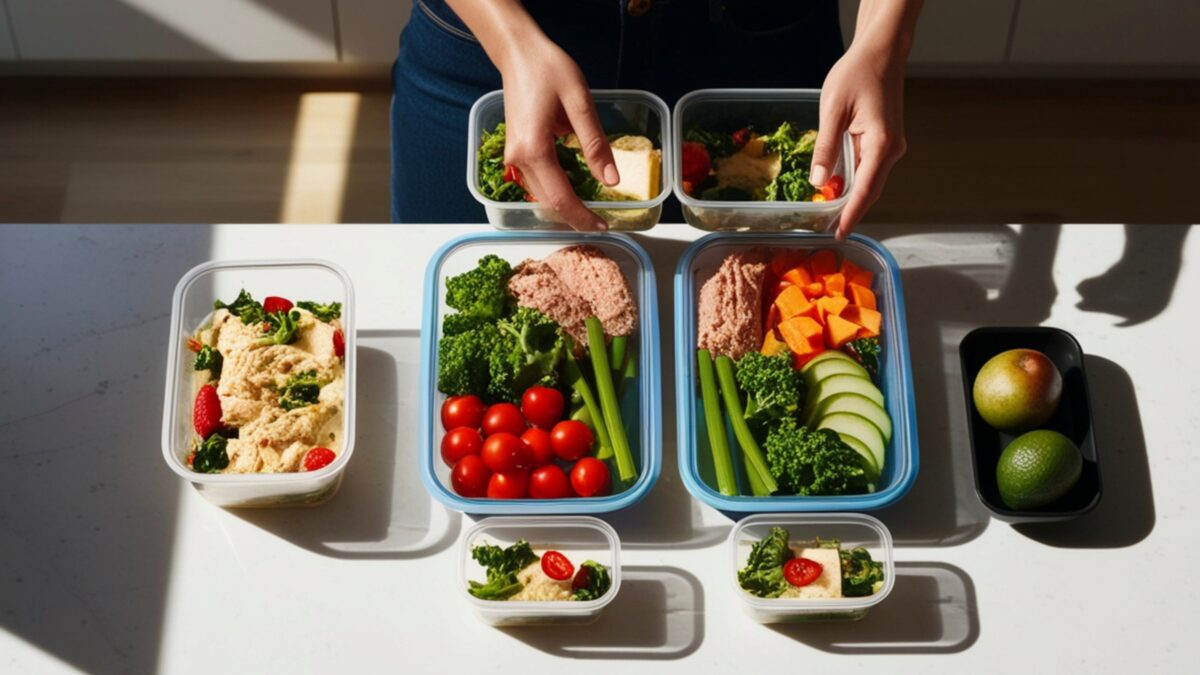
Batch where you can. A tray of roasted vegetables takes five minutes more than a single portion and gives you the base for three meals. Cooking in small single batches is one of the highest-waste habits in the home kitchen.
Putting It Together
The two habits connect naturally.
Read the label correctly and you stop throwing away food that was safe. Plan before you shop and you stop buying food that never had a chance. Together, they address the two root causes behind Singapore's 755,000 tonnes of annual food waste — and most of it is entirely avoidable (NEA, 2024).
Neither change is dramatic. Neither requires a new system, a new app, or a personality overhaul.
They just require knowing what you are looking at — and deciding before you buy.
Want to Close the Loop Further?
At resavour, we make it easier to get the most from what you buy — turning surplus and imperfect produce into snacks worth keeping in your pantry. The best zero-waste kitchen is one where nothing gets forgotten.
Explore our snacks | Learn our story | Partner with us
References
DBS Bank. (2022). Trash talk: The battle of the food waste bulge and why you should throw away less food. https://www.dbs.com/livemore/food/trash-talk-battle-food-waste-bulge-why-you-should-throw-away-less-food.html
National Environment Agency. (2024). Waste statistics and overall recycling. Government of Singapore. https://www.nea.gov.sg/our-services/waste-management/waste-statistics-and-overall-recycling
NUS Economics Society. (2025, May 19). Food waste externalities: The hidden costs of food waste in Singapore. https://nuseconomicssociety.com/marketmatters/2025/5/19/the-hidden-costs-of-food-waste-in-singapore
Towards Zero Waste. (2021). Food waste. Ministry of Sustainability and the Environment, Singapore. https://www.towardszerowaste.gov.sg/foodwaste/
United Nations Environment Programme. (2024). Food Waste Index Report 2024: Think Eat Save — Tracking progress to halve global food waste. UNEP. https://www.unep.org/resources/publication/food-waste-index-report-2024