
Why the scraps from our food system are one of its most underleveraged resources — and what Singapore is starting to do about it.
Every time you juice an orange, roughly half the fruit becomes "waste." The peel, the pulp, the seeds, the pith — all of it discarded, composted if you are lucky, incinerated if you are not. Multiply that by the citrus juice industry's annual output of 25 million tonnes of solid waste (Journal of Agricultural and Food Chemistry, 2022), and you begin to see not a disposal problem, but a resource problem. One we are only just beginning to solve.
This article is about what happens when we stop calling byproducts waste.
The Scale of What We Are Working With
Food processing generates byproducts at every stage of the supply chain. When oranges are juiced, around 50% of the fruit by weight becomes pomace — peel, pulp, and seeds rich in flavonoids, pectin, and essential oils (Martínez-Las Heras et al., 2022). When beer is brewed, spent barley grains account for 85% of the total brewing waste produced (Liu et al., cited in Shan et al., 2024). When tofu is made from soybeans, okara, the fibrous pulp left behind, is generated in quantities that exceed 30 tonnes per day in Singapore alone (Shan et al., 2024). When cheese is produced, whey is separated out at a ratio of roughly nine litres of whey per kilogram of cheese.
Globally, food systems lose or waste approximately 1.3 billion tonnes of food per year. That is about one-third of everything produced (FAO, cited in Shan et al., 2024). Much of this is not spoilage. It is byproduct: the structural, predictable, industrial-scale output of food manufacturing that falls outside the saleable product.
The question is not whether byproducts exist. They always will. The question is what we do with them next.
What Are Food Byproducts — and How Are They Different From Waste?
The terms byproduct, coproduct, and waste are often used interchangeably. They should not be.
A byproduct is a secondary material produced during the manufacturing of a primary product. It was always going to be created — it is inherent to the process. Orange peel from juice production. Spent grain from brewing. Okara from tofu. Fish bones from filleting. These are predictable, consistent, and in many cases nutritionally significant.
A coproduct is a byproduct that is already being captured and valorised alongside the main product — whey protein in dairy processing is the clearest example. Cheesemakers once discarded whey as effluent. Today, whey protein is a multi-billion-dollar ingredient category sold into sports nutrition, infant formula, and food manufacturing.
Waste is what remains when neither primary nor secondary use has been found. The distinction matters because the same material can be a byproduct, a coproduct, or waste depending entirely on whether the infrastructure and knowledge exist to capture it.
That infrastructure is now being built.
Where Byproducts Go Today
Most food byproducts follow one of three paths: animal feed, composting, or incineration. Of these, animal feed is the most common industrial route — citrus pomace is dried into pellets and sold as livestock feed; spent grain is collected by farms; fish offcuts are rendered into fishmeal. These are legitimate uses, but they represent the lowest rung of the value ladder.
Composting captures some nutrient value but destroys everything else — the flavour compounds, the proteins, the bioactive components that make food byproducts genuinely interesting.
Incineration, which is Singapore's primary waste disposal method, destroys all of it. Singapore generated approximately 755,000 metric tonnes of food waste in 2024 — down slightly from 784,000 tonnes in 2023, continuing a gradual decline in total waste generation (NEA, 2025). Of that, 132,000 tonnes were recycled: an 18% recycling rate, unchanged from 2023 and 2022, but up from 13% a decade ago. The remaining 82% — around 623,000 tonnes — was incinerated or sent to Semakau Landfill, Singapore's only remaining landfill, which is expected to reach capacity by 2035 unless waste reduction accelerates (NEA, 2025).
We are optimistic that this number will improve. A study commissioned by the Singapore Food Agency (SFA) and NEA, which surveyed 74 local food processing companies between August 2022 and June 2023, mapped approximately 174,300 tonnes of homogeneous food waste and calculated valorisation rates — the share of each stream being put to productive use — for each category (SFA/NEA, 2023).
The results reveal a striking spread. Bread waste from commercial producers is valorised at 99.9% — essentially all of it captured, largely through animal feed and redistribution. Soy byproducts (okara and related streams) are valorised at 96%. Coffee grounds at 75.9%. Spent grains at 82.7%, despite being generated in the largest volume of any surveyed stream at around 89,200 tonnes per year. This study shows where the gaps are: seafood offcuts are barely captured at all, with a valorisation rate of only around 5% across approximately 1,080 tonnes surveyed. Fruits and vegetable processing waste sits at 35.9%. This means nearly two-thirds of that stream goes to incineration.
These numbers matter for a specific reason: they tell us where the opportunity is. The streams with the lowest valorisation rates are not necessarily the hardest to use — they are the ones where demand infrastructure does not yet exist. Seafood offcuts are rich in collagen, omega-3 oils, and calcium. Fruit and vegetable processing waste contains pectin, polyphenols, and natural colourants. The gap is not in the material. It is in the system.
The gap between what these materials are and what they are currently used for is the gap that a growing number of scientists, entrepreneurs, and food companies are racing to close.
The Innovation Wave
The past five years have produced a wave of commercial innovation in food byproduct valorisation. Some of the most compelling examples are now coming out of Singapore.
Where do food byproducts go — and where could they?
Select a byproduct type to see what is currently done with it, and what is possible.
Prefer is perhaps the most striking local case. Founded in 2022 as a spinoff from Singapore's Agency for Science, Technology and Research (A*STAR), Prefer makes bean-free coffee from food industry byproducts: day-old bread from Gardenia, okara (soybean pulp) from Mr Bean, and spent barley grains from local breweries including Brewerkz and The 1925 Brewing Co (Tatler Asia, 2024). These three waste streams are blended, fermented, and roasted to produce a product that brews exactly like coffee, carries a carbon footprint estimated at ten times smaller than conventional coffee, and is now stocked across more than 75 locations in Singapore, with US$6.2 million raised in total funding (Green Queen, 2025).
What makes Prefer remarkable is not just the product — it is the supply chain logic. The raw materials are locally sourced waste streams that Singapore generates in significant daily volumes: at least 30 tonnes of okara and 55 tonnes of spent barley grains per day (Shan et al., 2024). By treating these as inputs rather than outputs, Prefer is doing what the byproduct economy requires at scale: creating stable demand for materials that currently have none.
Aquafaba — the liquid from cooked chickpeas — is arguably the most successful story of consumer-level byproduct valorisation in recent memory. Once poured down the sink by home cooks and food manufacturers alike, it is now widely understood to function as a direct egg white substitute, capable of producing meringues, mousses, and cocktail foam with no flavour carry-over. It entered mainstream food culture through a single 2014 discovery by French musician Joël Roessel, was popularised online, and is now a standard ingredient in vegan food manufacturing. No patents, no R&D budget — just the recognition that something previously discarded had value.
Flours are another category gaining commercial traction. Orange, lemon, and mango peels — rich in pectin, fibre, and polyphenols — are being dried and milled into flour alternatives and functional food ingredients. Spent grain bread, where brewery waste is incorporated into baked goods for added protein and fibre, has moved from craft bakeries into retail. These are not niche experiments. They are products on shelves, certified and sold to consumers who may not realise that what they are buying was, until recently, going to landfill.
The Upcycled Food Association's certification programme, now administered by Where Food Comes From Inc., has become the primary global credentialing mechanism for this category. As of 2024, 105 companies held certification across 14 countries, with certified products collectively diverting approximately 1.2 million tonnes of food waste — the equivalent of 248 million bags of groceries (Where Food Comes From Inc., 2025). By Q4 2025, cumulative diversion since the programme's launch had reached 5.12 million tonnes (Prepared Foods, 2025).
New product launches carrying an upcycled claim grew at a compound annual growth rate of 77% between 2019 and 2023 (Innova Market Insights, cited in IFT, 2024). The global upcycled food products market was valued at approximately US$61.7 billion in 2024 and is projected to reach US$120 billion by 2034 (Market.us, 2024).
Why This Matters More in Singapore Than Almost Anywhere Else
Singapore imports more than 90% of its food (Earth.Org, 2024). This is not a minor vulnerability — it is a structural condition that the government has acknowledged, and which underpins the 30-by-30 goal: to produce 30% of Singapore's nutritional needs locally by 2030 (SFA, 2019). Food waste, in this context, is not merely an environmental issue. It is a food security issue. Every kilogram of food — or food byproduct — discarded without use represents a resource that had to be imported, processed, and distributed at cost, and then discarded without the value being recovered.
Byproduct valorisation is, in this framing, an extension of food security strategy. If Singapore can extract more nutritional and economic value from the food inputs it already imports, it reduces effective dependency on those imports. The okara generated by tofu production, the spent grain from breweries, the fish offcuts from wet markets and processing facilities — these are already here, already paid for, already available. What they need is a use.
Academic research at NUS and NTU has demonstrated prototypes across multiple application categories: okara-based probiotic drinks, biscuits with enhanced digestibility from fermented okara, spent grain protein and fibre ingredients, and an okara-derived biostimulant that promotes leafy vegetable growth and prevents powdery mildew in strawberry plants — potentially relevant to Singapore's vertical farming sector (Shan et al., 2024). These are not speculative. They are peer-reviewed results waiting for commercial translation.
The Zero Waste Masterplan and the Resource Sustainability Act — which from 2024 requires large commercial and industrial food waste generators to segregate waste for treatment and submit annual reports — are beginning to create the regulatory conditions for this translation (NEA, 2024). Mandatory reporting means data. Data means supply chains can be mapped. Supply chains can be contracted against. And contracts are what give entrepreneurs like Prefer's founders the confidence to build.
The Broader Argument: Extraction Without Production
There is an argument, worth stating plainly, that the byproduct economy represents something more significant than clever waste reduction.
Food production places enormous pressure on land, water, energy, and biodiversity. The search for new protein sources, new ingredients, and new flavour compounds typically leads to more extraction — more land cleared, more water consumed, more inputs required. The byproduct economy inverts this. It finds new value in materials that already exist, without requiring any additional resource extraction to produce them. The inputs are already generated. The supply is already flowing. The only question is whether the knowledge and infrastructure exist to capture it.
Globally, this unlocks genuine economic value from what was previously classified as a cost — a disposal expense. For a country like Singapore, where every food input must be imported and every disposal outlet — particularly Semakau Landfill — is finite, this is not an abstract benefit. It is a practical one.
What You Can Do
Consumer choices compound in ways that are easy to underestimate.
Buying products that incorporate upcycled ingredients — spent grain bread, aquafaba-based products, fruit peel teas, foods carrying the Upcycled Certified mark — creates the demand signal that makes commercial valorisation economically viable. It tells food businesses that consumers will pay for this, which is the only signal that reliably changes what gets produced.
At home, the logic is the same as in industry: before something goes to the bin, ask whether its value has been fully extracted. The scrap guide elsewhere on this site gives you the methods. The principle is simpler: what looks like the end of a food's useful life is usually the beginning of its next one.
At Moonbeam, we are interested in that next one. What we make, and what we source, starts from the same question: what does this material still have to offer?
At Moonbeam, We Want to Be Part of This Ecosystem
Byproducts are not a niche interest for us — they are what we are built on.
Singapore's shift toward a circular food economy is policy-led — through NEA's food waste reduction targets, the Resource Sustainability Act, and SFA's 30 by 30 goal. But policy creates the conditions; it does not fill them. The ecosystem that actually captures byproduct value is made up of food producers, procurement managers, retailers, and the people who choose what ends up on their plate.
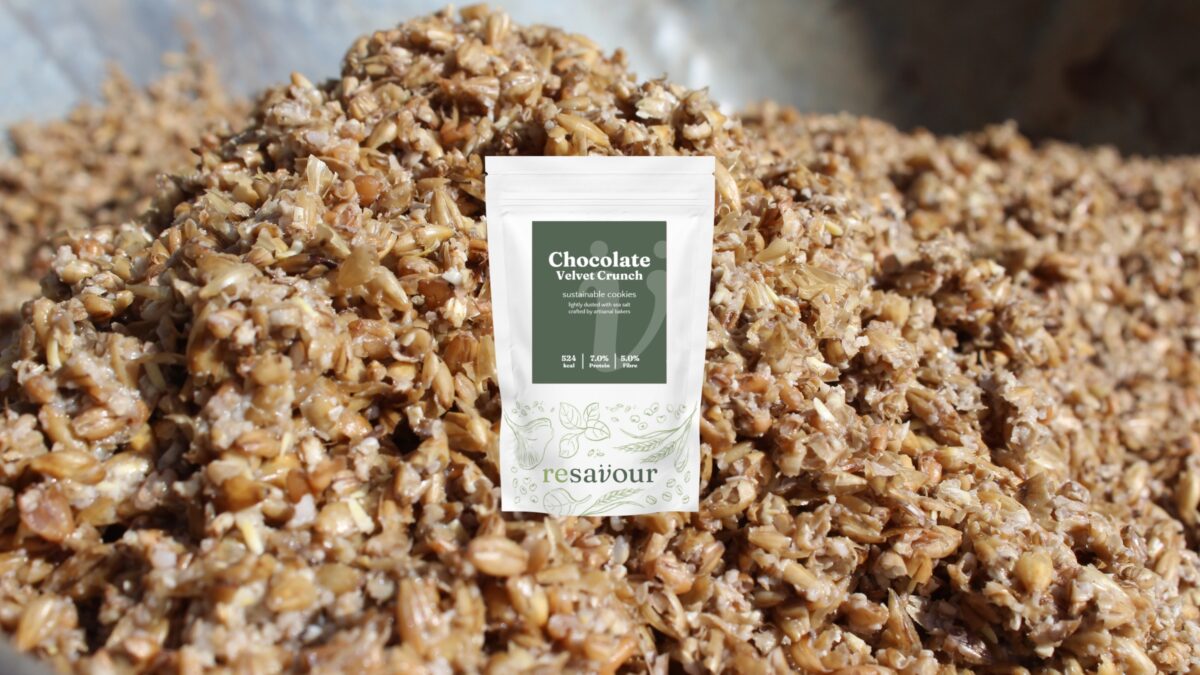
We built Moonbeam around upcycled ingredients — the parts of the food system that conventional supply chains discard. Spent grain, coffee grounds, okara: materials that are generated daily, in volume, and sent to landfill or incineration because no one has built the demand to capture them. That is what Resavour, our bakery, is doing — converting those streams into granolas, cookies, and bread that are nutritionally denser than their conventional equivalents. Not as a compromise. Because the byproducts themselves are what make them better.
For businesses with a byproduct stream looking to explore what could be done with it, or for anyone who wants to support what this ecosystem is building by buying into it, we would like to be part of that conversation.
Explore our snacks | Learn our story | Partner with us
References
Earth911. (2026, February). Taking your first bite of upcycled food: Understanding the certification. https://earth911.com/how-and-buy/taking-your-first-bite-of-upcycled-food-understanding-the-certification/
Earth.Org. (2024). How Singapore aims to secure its food supply with its '30 by 30' plan. https://earth.org/singapore-30-by-30-plan/
Esquire Singapore. (2024). Introducing bean-free coffee brand, Prefer. https://esquiresg.com/introducing-bean-free-coffee-brand-prefer/
Green Queen. (2025). Singapore's Prefer brews up $4.2M in funding for bean-free coffee and cocoa. https://www.greenqueen.com.hk/singapore-prefer-bean-free-coffee-cocoa-chocolate-funding/
IFT (Institute of Food Technologists). (2024, September). Upcycled foods break new ground. Food Technology Magazine. https://www.ift.org/news-and-publications/food-technology-magazine/issues/2024/september/features/upcycled-foods-break-new-ground
Journal of Agricultural and Food Chemistry. (2022). Fruit juice industry wastes as a source of bioactives. https://pubs.acs.org/doi/10.1021/acs.jafc.2c00756
Market.us. (2024). Global upcycled food products market. https://market.us/report/upcycled-food-products-market/
Martínez-Las Heras, R., et al. (2022). Characterization of the orange juice powder co-product for its valorization as a food ingredient. PMC. https://pmc.ncbi.nlm.nih.gov/articles/PMC9818329/
National Environment Agency (NEA). (2025). Waste statistics and overall recycling. https://www.nea.gov.sg/our-services/waste-management/waste-statistics-and-overall-recycling
Singapore Food Agency & National Environment Agency (SFA/NEA). (2023). Study of food waste from local food systems. https://www.nea.gov.sg/our-services/waste-management/3r-programmes-and-resources/food-waste-management/food-waste-valorisation
Prepared Foods. (2025, December). Upcycled food movement gains scale, credibility and global momentum in 2025. https://www.preparedfoods.com/articles/131208-upcycled-food-movement-gains-scale-credibility-and-global-momentum-in-2025
Shan, J., et al. (2024). Food waste valorization: Leveraging Singapore's Zero Waste Master Plan and 30-by-30 goal. Sustainability, 16(17), 7321. https://www.mdpi.com/2071-1050/16/17/7321
Tatler Asia. (2024). Singapore startup Prefer makes Asia's first bean-free coffee from repurposing food by-products. https://www.tatlerasia.com/dining/drinks/prefer-bean-free-coffee-singapore
Where Food Comes From Inc. (2025, January). Upcycled Certified enjoys strong growth. GlobeNewswire. https://www.globenewswire.com/news-release/2025/01/21/3012726/0/en/Upcycled-Certified-Enjoys-Strong-Growth-as-Consumers-Seek-Out-Sustainably-Produced-Foods-and-Beverages-that-Reduce-Waste-and-Lessen-Environmental-Impacts.html