
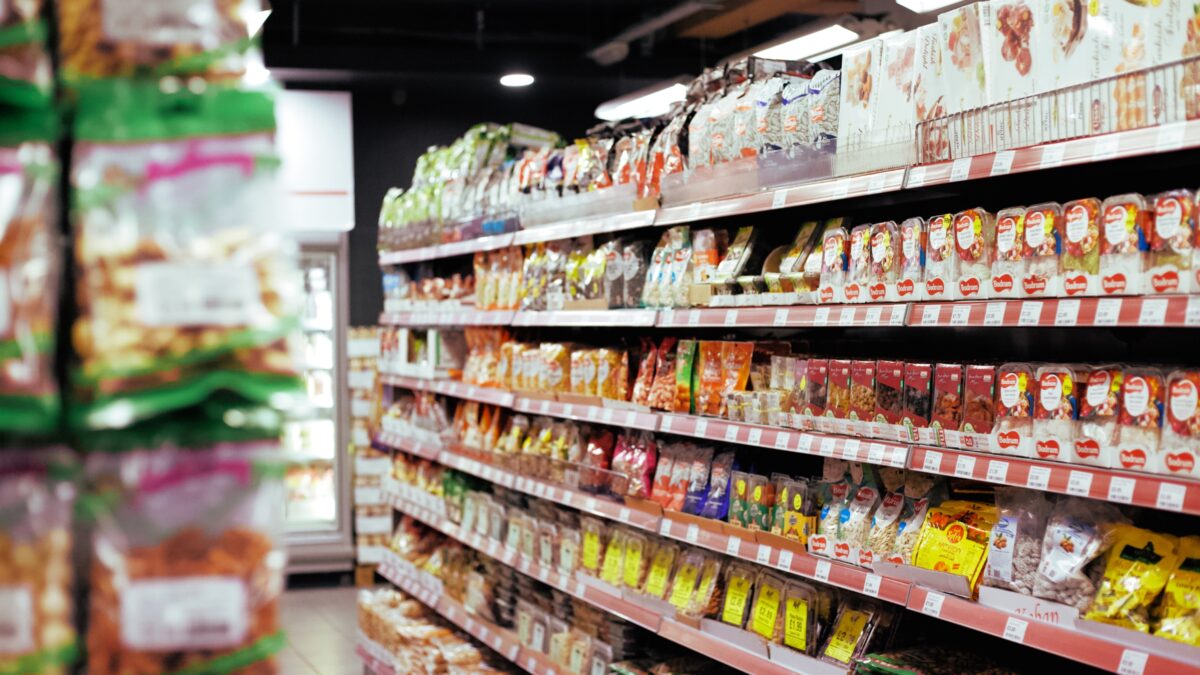
The price gap between conventional and sustainable food is real. But the reasons behind it are more layered — and more honest — than most people realise.
The Question We Get Asked Most
Every manufacturer in the sustainable food space gets asked the same thing eventually — usually at a market stall, sometimes in a boardroom:
"Why is it so expensive?"
It's a fair question. And the honest answer isn't "because sustainability costs more" — that's circular. The real answer is that the green premium has three distinct origins, and only one of them gets talked about.
Most people assume it's branding. A bit of greenwash, some premium packaging, and a story that justifies a higher ticket price. And yes — branding is part of it. But it is the smallest part.
The more significant drivers are structural: the economics of small-scale manufacturing, and the true cost of policies that most conventional food companies are not yet required to follow. Understanding these three levers doesn't just explain why sustainable food costs more. It explains why that gap is likely to narrow — and what it would take to close it faster.
The Green Premium Is Already Bigger Than You Think
Before we unpack the causes, the scale of the premium matters. According to PwC's 2024 Voice of the Consumer Survey — which collected perspectives from more than 20,000 consumers across 31 countries — consumers are willing to pay an average of 9.7% more for sustainably produced or sourced goods, and 80% of consumers say they are willing to pay more for sustainably produced or sourced goods at all (PwC, 2024).
But here's the uncomfortable nuance: while roughly 30% of consumers surveyed worldwide in 2023 had paid a small premium of one to five percent more for a sustainable product, the share willing to pay five percent or more has dropped noticeably since 2020 — signalling that price remains one of the leading purchasing factors, and willingness to absorb a steep green premium has real limits (Tighe, 2024).
That tension — growing demand, shrinking price tolerance — is exactly why understanding where the premium comes from matters so much. If we can be precise about the causes, we can be strategic about the solutions.
Reason One: Branding (The Part Everyone Blames)
Let's get this out of the way, because it is the accusation that sustainable brands hear most often: you're just charging more because you can.
There is truth in this — but it is more legitimate than it sounds. Green branding is fundamentally about differentiation and sustainable identity, and that identity leads to buyer loyalty. Branding by these means results in an inelastic pricing scheme for manufacturers — meaning consumers are less sensitive to price increases, giving brands more room to hold their price point (Sarin et al., 2011).
This is not manipulation. It is a rational outcome of building genuine trust. When a brand has invested in transparency, ethical sourcing, and authentic sustainability credentials, customers who value those things become less price-sensitive. They are paying for certainty — certainty that what is on the label is real, that the supply chain is not hiding something, and that their purchase is doing what it claims.
Highlighting the green premium can also increase consumer preference by raising their perception of company effort, which in turn positively influences their sense of self-accountability and preference for the product (Wang et al., 2024). The premium does not appear from nothing — it reflects the cost of building and maintaining the credibility that earns it: certifications, audits, transparent sourcing, and the communications that tell that story.
But branding alone cannot explain the full price gap. To understand the rest, you have to go into the factory.
Reason Two: Manufacturing — The Economies of Scale Problem
This is the structural driver that gets the least airtime, and it is the one that hits manufacturers hardest.
Conventional food manufacturing operates at massive scale. Large facilities, long production runs, bulk purchasing of inputs, and optimised logistics all drive the cost per unit as low as possible. This is the economic logic of industrial food — it is efficient, and efficiency is cheap.
Sustainable food manufacturing, at its current stage, operates differently. Organic Valley, one of the most well-documented cooperative models, notes that its farms are approximately 50% smaller than the national average, and that smaller scale means the business cannot rely on economies of scale in the same way — which results in meaningfully higher financial cost per unit produced (Organic Valley, 2020).
The same dynamic applies across the sustainable snack and food manufacturing sector:
- Ingredient costs: Materials used in sustainable and organic farming — natural fertilisers, non-GMO feed, certified organic inputs — far exceed the costs of their synthetic equivalents (Navitas Organics, 2023).
- Certification overhead: Obtaining and maintaining organic or sustainability certification involves initial application fees, site inspections, required equipment upgrades, and annual renewal costs — all before a single certified product reaches a shelf (Navitas Organics, 2023).
- Supply chain complexity: Sustainable produce often requires specialised handling to remain uncontaminated during transport, adding logistical cost at every node (Orchard Food, 2024).
- Lower production volumes: Smaller runs mean higher per-unit packaging costs, less bargaining power with suppliers, and fewer efficiencies in scheduling and labour.
Put simply: the manufacturing green premium is not a choice. It is the current cost of doing things right at a scale that has not yet caught up to demand.
The encouraging news is that this changes with volume. When more consumers buy sustainable products, demand increases, operations can scale up, and per-unit costs fall (Organic Valley, 2020). The effect is already visible — organic products that were once prohibitively priced have moved dramatically toward accessibility over the past decade as the category has scaled. According to the NYU Stern Center for Sustainable Business Sustainable Market Share Index™, sustainability-marketed products delivered approximately one-third of all consumer packaged goods (CPG) growth in 2023, despite representing less than one-fifth of total market share — the largest single-year increase in market share since the Index began (Kronthal-Sacco & Circana, 2024). Scale is the unlock. It is already happening.
Reason Three: Policy — Paying for What Conventional Food Doesn't
This is the driver that almost nobody talks about, and arguably the most important one.
Conventional food is not cheap because it is inherently efficient. It is cheap, in part, because it externalises costs — pushing them onto environments, communities, and workers rather than absorbing them into the price of the product.
Sustainable food manufacturers are choosing to internalise those costs. That internalisation shows up in the price.
Fair wages across the supply chain
At Organic Valley, sustainable farmer pay is the cooperative's stated primary goal. Farmers are paid equitably, and the business runs on the remainder — not the other way around (Organic Valley, 2020). That is a deliberate policy choice, and it carries a cost that conventional supply chains do not typically bear.
The European Union's Corporate Sustainability Reporting Directive (CSRD), in force since January 2023, now requires companies to report on how they intend to ensure adequate wages to their own workforce and to workers in their value chain — with living wage benchmarks as the reference standard (UN Global Compact, 2024). Sustainable food manufacturers have been operating ahead of this curve. Conventional ones are now being compelled to catch up.
Fairtrade certification — one of the most visible expressions of this commitment — requires a minimum floor price regardless of commodity market fluctuations, plus an additional Fairtrade Premium paid on top, which goes directly to farmer communities for investment in education, business development, and infrastructure (Fairtrade International, n.d.). Every certified product carries that cost.
The hidden subsidy problem
Perhaps the most structurally underreported issue is this: conventional food benefits from government agricultural subsidies that sustainable food largely does not.
Commodity crop producers — the backbone of industrial food supply chains — receive substantial subsidy support in most major markets. Specialty crop farmers and small-scale organic producers typically do not receive equivalent support (National Sustainable Agriculture Coalition, n.d.). A more accurate framing, then, is not that organic food is more expensive than conventional food — it is that the price of conventional food is kept artificially low by subsidy structures that are not available to sustainable producers.
The playing field is not level. When a conventional product appears cheaper at the shelf, part of that price difference has already been paid — by taxpayers, through the agricultural subsidy system.
Regulatory compliance as a cost centre
Sustainable manufacturers are navigating an expanding regulatory environment that conventional producers are not yet fully subject to. Carbon accounting, packaging standards, supply chain due diligence, and sustainability reporting all require real investment — in systems, in people, in auditing, and in time. In two-thirds of categories studied, products that made ESG-related claims grew faster than those that did not — but meeting those claims authentically requires absorbing those compliance costs into the product price (McKinsey & NielsenIQ, 2023).
The policy premium, in short, is what happens when you choose to operate as if the regulations of tomorrow are the standards of today.
The Sustainability Liability: Why Getting This Right Matters
There is one more wrinkle that every sustainable food brand must understand.
Research published in the Journal of Marketing identified what scholars call the "sustainability liability" — the finding that consumers sometimes associate sustainable products with gentleness-related attributes, and consequently assume they may underperform on strength or efficacy (Luchs et al., 2010). In food terms, this translates to a risk that consumers assume a sustainable snack will taste like a compromise.
This perception risk is real. And it means that sustainable brands cannot rely on the green premium alone to communicate value — they must ensure the product experience is strong enough to collapse that assumption entirely. Sustainability gets you considered. Performance keeps you purchased. The green premium is only defensible when both are true.
This is precisely why understanding where the premium comes from is so important — not just for pricing strategy, but for how you tell the story. A premium justified by branding alone is vulnerable. A premium justified by real manufacturing economics, genuine policy compliance, and fair treatment of people across the supply chain is a story worth telling.
What This Means in Practice — at Moonbeam
At the moonbeam co., we sit at the intersection of all three of these forces. We are a small-scale manufacturer, which means we do not yet have the economies of scale to bring per-unit costs to conventional levels. We source upcycled, traceable ingredients, which means our inputs cost more. We pay fairly across our supply chain. We invest in certification and compliance. And yes — we have built a brand that stands for something, which means the trust we have earned has value.
We do not apologise for any of that.
But we also believe that transparency is the right response to the "why so expensive?" question. Not defensiveness. Not a vague appeal to the planet. Transparency — about what is in the price, why it is there, and what is being done to bring it down over time.
Here is what we know:
- Scale will close the manufacturing gap. As sustainable food becomes more mainstream, production runs will lengthen, ingredient volumes will grow, and per-unit costs will fall. We have already seen it happen in organic dairy and plant-based proteins.
- Policy will level the playing field. As living wage requirements, carbon reporting, and sustainability due diligence become mandatory for all food companies — not just those who adopted them early — the cost advantage of externalising harm will shrink.
- Branding will remain, and that is legitimate. Authentic sustainable brands will continue to command a premium from consumers who value transparency and ethics. That is not exploitation — it is the market correctly pricing trust.
The Green Premium Is Temporary — But for the Right Reasons
The green premium exists because sustainable food is currently doing the hard work of internalising costs that conventional food continues to externalise. That gap will close — through scale, through policy, and through the growing number of consumers and manufacturers choosing to operate differently.
The direction of travel is clear: sustainability-marketed products are growing their market share, outpacing conventional products in growth rate year on year (Kronthal-Sacco & Circana, 2024), even in the face of sustained inflation pressure (McKinsey & NielsenIQ, 2023).
The question is not whether sustainable food can compete on price. It is how quickly the structural conditions — scale, policy, and market maturity — will allow it to.
We think the answer is: faster than most people expect.
Want to understand how we build food at Moonbeam?
Our snacks are made from upcycled ingredients, designed for circularity, and priced as honestly as we can manage. As we scale, that price will move. Until then, we are committed to telling you exactly what you are paying for — and why every part of it matters.
Explore our snacks | Learn our story | Partner with us
References
Fairtrade International. (n.d.). Living income: Fairtrade risk map. https://riskmap.fairtrade.net/salient-issues/living-income
Kronthal-Sacco, R., & Circana. (2024). Sustainable Market Share Index™ 2023. NYU Stern Center for Sustainable Business. https://www.stern.nyu.edu/experience-stern/about/departments-centers-initiatives/centers-of-research/center-sustainable-business/research/csb-sustainable-market-share-index
Luchs, M. G., Naylor, R. W., Irwin, J. R., & Raghunathan, R. (2010). The sustainability liability: Potential negative effects of ethicality on product preference. Journal of Marketing, 74(5), 18–31. https://doi.org/10.1509/jmkg.74.5.018
McKinsey & Company & NielsenIQ. (2023). Consumers care about sustainability — and back it up with their wallets. https://www.mckinsey.com/industries/consumer-packaged-goods/our-insights/consumers-care-about-sustainability-and-back-it-up-with-their-wallets
National Sustainable Agriculture Coalition. (n.d.). Organic certification cost-share programs. https://sustainableagriculture.net
Navitas Organics. (2023). 5 reasons organic food is more expensive. https://navitasorganics.com/blogs/navitaslife/5-reasons-organic-food-is-more-expensive
Orchard Food. (2024). Why is organic produce more expensive? https://www.orchardfood.co.za/blogs/news/why-is-organic-produce-more-expensive
Organic Valley. (2020). Why is organic food more expensive? https://www.organicvalley.coop/blog/why-is-organic-food-more-expensive
PwC. (2024). Consumers willing to pay 9.7% sustainability premium, even as cost-of-living and inflationary concerns weigh: PwC 2024 Voice of the Consumer Survey. https://www.pwc.com/gx/en/news-room/press-releases/2024/pwc-2024-voice-of-consumer-survey.html
Sarin, S., Sego, T., Kohli, A. K., & Challagalla, G. (2011). Exploring price sensitivity of a green brand: A consumers' perspective. ResearchGate/Journal of Brand Management. https://www.researchgate.net/publication/258848541
Tighe, D. (2024, March 11). How much more consumers paid for sustainable items, 2023. Statista. https://www.statista.com/statistics/1454999/premium-consumers-paid-more-for-a-sustainable-product/
UN Global Compact. (2024). Living wage. https://unglobalcompact.org/what-is-gc/our-work/livingwages
Wang, J., Cao, Y., & Liu, L. (2024). Promoting green choices: How price premium displays influence consumer preference for green products. Resources, Conservation and Recycling, 206. https://doi.org/10.1016/j.resconrec.2024.107611